Dear students,
The saying echoes history by nature likely repeats itself. Last year, your seniors did a great job when they fared well in the major exam. Though, some of them whose results were questionable for showing marked improvement. They might have played dirt tactics the ones deemed normal and acceptable nowadays, even to teachers themselves for the sake of glorifying school name. To say, last year's PMR is historic is subject to debate as cheating was rampant during exam last year. But, those who excelled still deserve a pat on their back for job well done.
There are dissenting views of ways we teachers perceive those cheating during the exam. Nevertheless the word 'cheat' is more than enough to justify things either right or wrong. Or, there is a school of thought that propagates the notion that , by nature, all things are permissable should someone be in dire need or emergency like having to eat pork in order to survive. But, do almost all our students fall under the catagory? i am pretty sure they are not as they have ample time like their fellow friends who burn midnight oil in search of success,as path of least resistence is for losers only.
Both major exam , PMR and SPM are just six months away, you dear student should execute the best strategies coming your way if you dream to see your dream not a mere dream!Consider cheating option as the last option and you will leave the exam hall as a proud warrior not as a coward!
Sir
Sir
Monday, May 10, 2010

Saturday, May 8, 2010
A TRIBUTE TO OUR VERY OWN YOUNG GLADIATORS!
I am at the moment attending a pedagogy course somewhere only I know. In one of the sessions, we were asked to define 'change'. Having been inspired by Gandhi's famous 'Be the change you want to see', I defined it as 'something that I want to see and be.' My fellow coursemates have A very interesting and intellectual ways of defining the 6-letter word and the likes are 'Paradigm shift', 'Revolution' and the one that I like the most is 'Change is the replacement of old ideas with another new ideas and it requires those who think open-mindedly. Well still I am of the belief that change is something that we want and love to see. One of the profound changes that can be observed is in our 4 gladiators who were brave enough to face all of the odds and transformed themselves into someone who had experienced talking in front of the crowd in a way so great, so eloquent. I am so proud of you! And never stop improving yourself into being a great public speaker! Well done my dear EDY,MAT YIE,ZILMAJDI & NURUL!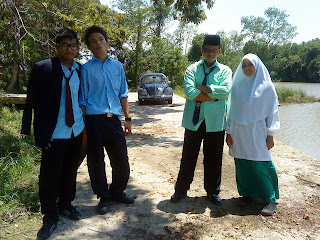
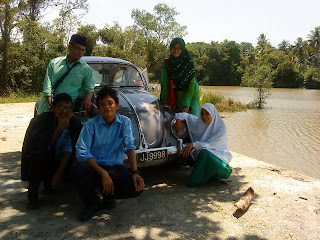


A HEADMISTRESS OF EXAMPLE
Sunday May 2, 2010
Cocooned in our comfort zone
Sharing The Nation
By ZAINAH ANWAR
Our obsession with control and conformity in thought and behaviour discourages the young from embracing diversity.
MY much loved, much admired headmistress, Mrs Dawn Parry, passed away last week. It’s been almost 40 years since I left the Sultan Ibrahim Girls School in Johor Baru. Yet, to this day, my school mates and I still think of Mrs Parry and the school she led for 28 notable years with much fondness. She was a teacher who made the difference to our lives and our future.
To me, her most precious gift was to expose us to a world beyond school books. Academic excellence alone does not make a good student, nor a good human being, she used to say. She wanted us to be all-rounders, who studied hard and played hard as well. She favoured those who excelled in extra-curricular activities, and sighed at those who only wanted to bury their noses in textbooks, disinterested in sports, music or debates.
She got us to raise money to build the school band, which went on to win the first national-level brass band competition in 1980. She loved music and formed the school choir, which won the national level choral festival in 1969. She introduced us to opera and got us to perform Gluck’s Orpheus and Eurydice for our annual speech day in 1970. She travelled during school holidays and when she returned she shared with us stories of a world different from ours during school assembly.
School was a wonderful journey of learning and discovery. Yes, we had our share of uninspiring teachers, but Mrs Parry made up for it by touching all those under her charge. She opened our eager hearts and minds to new ideas and experiences.
We were privileged that our school years in the 1960s and 1970s introduced us to literature, poetry, debates, music, drama, dance, sports, and community service in the uniformed bodies. These were all integral to our growth as thinkers and doers.
Nowadays it seems that only those who attend expensive private schools get such a liberal education that expands the mind, while those in government schools are too often dumbed down by an education system obsessed with producing students with straight As and led by teachers unaware of a world beyond textbooks and examinations.
I met a few of these top performing Malaysian students studying at a university in the American Midwest a few weeks ago while I was there teaching a course on Islam and Women in South-East Asia.
What gave me hope was their excitement about the new knowledge, ideas and experiences they were exposed to. As we sat for almost four hours, chatting about religion, women’s rights, politics, sex and marriage, the words kept tumbling out that their life there was so interesting, so challenging, so different, so refreshing. They could feel their minds stretched and their prejudices and stereotypes challenged.
They attended a talk by an imam and a rabbi about the Allah debate in Malaysia and went away agreeing that Allah is not the monopoly of Islam or Muslims.
One of them had attended an Islamic society meeting, and was startled by the different kinds of Muslims she met there. She said this was the first time she had encountered Muslims who dressed and thought differently and it dawned on her that this was the real world. And she liked it this way. There is not just one kind of Muslim who all believe that Kartika should be caned for drinking, she discovered.
It is ironic that despite growing up in a country that is multi-ethnic and multi-religious, their exposure to diversity came by studying in the United States. This is no surprise to those of us who know that our education system has become mono-ethnic and our obsession with control and conformity in thought and behaviour has left little room for the young to explore and embrace diversity.
They pounded me with questions about the Islamic state, Islamic law, and equality and justice. If Kartika wanted to be caned, why was it anybody’s business to stop her from undergoing her punishment, one of them asked. Well, I said, Kartika was a first-time offender, she pleaded guilty, and there was no violence involved in the offence she committed. Yet, having met the criteria for all this under the sentencing guidelines, she was given the maximum sentence.
Why? What about the fact that the Constitution forbids women from being caned? Why should Muslim women be the exception? And why the double standards? We know so many of the rich and famous who drink and yet nothing ever happens to them. Poor Kartika went on holiday to Pahang and found her life turned upside down because some religious zealots wanted to turn her case into a lesson for others.
As they pondered on these facts, they looked at me and asked why they had never heard these arguments before.
As we talked, it struck me how smart and thoughtful these students could be, and that what was missing from their early life was an education that encouraged and nurtured inquiring and critical minds. It was only when they arrived in the West that they were able to learn, digest and think for themselves about what was right and wrong, what was just and unjust.
But they are among the lucky few, able to win scholarships to study in top universities that provide them with an abundance of opportunities to learn differently.
I know many Muslims who discovered the beauty and justice of Islam only in the United States when they studied with professors, many of whom were non-Muslims or converts who showed respect for the religion.
But what about the thousands of students who never leave Malaysia, who move from a closed school to a closed university and then to a closed workplace, cocooned in the comfort of their own small world of certainties?
This brings me back to Dawn Parry and the importance of a mind-expanding education. The impact of such an education is a lasting gift for living. It is not that Malaysians, in particular the Malays, are inherently close- minded and unable to move with the times.
Like everyone else, their world views are shaped by their education and upbringing. If the environment discourages critical thinking and punishes anyone for non-conformity, why on earth would anyone dare to be different?
Some years ago, I met an Egyptian Islamist leader and an Indonesian activist who studied with Malaysian students in al-Azhar University in Cairo. They were both puzzled that a country as modern and developed as Malaysia could produce the most close-minded students they had ever met. While the Indonesians were studying with the more reform-minded professors in al-Azhar, discussing the newest ideas and latest books on Islam, the Malaysians chose the most conservative and least challenging teachers and refused to join any of the discussion groups.
As wont with activists, my Indonesian friend committed himself to engaging with the Malaysian students. He spent hours discussing and debating with them about democracy, women’s rights, differences and diversity of opinion in Islam. He concluded that the problem was not so much that the Malaysian students were ideologically conservative, but that in the schooling they went through, they were never exposed to diverse sources of knowledge in Islam.
However, when challenged with different sources of knowledge, many of the Malaysians were open to the new ideas and the possibilities of change – so he felt that all was not lost.
But the closing of the Malay mind is a systemic problem that needs more than individual effort to undo the long-term damage already done. It calls for a comprehensive solution and a radical overhaul of our education system.
The Prime Minister in his speech on the New Economic Model (NEM) talked about giving our children the best education, the need to produce and compete for the best talent to drive the economy forward, and the importance of innovation and creativity to turn Malaysia into a high income developed country.
To do this, he would have to build a new national sense of purpose that can mobilise all Malaysians, including the Malays, to meet the real challenges ahead.
As it is, the National Economic Advisory Council report on the NEM confirms the mess we are in. In spite of the high capital outlays, our education system is not producing talent, and whatever talent we have is leaving the country, it states damningly. How did it all go wrong is not difficult to answer. So how can we set it right again?
The likes of my late headmistress Dawn Parry would have provided answers because she once guided us through an education that built our capacity for critical inquiry, developed our passion for life, and cultivated our desire to make a difference in the world.
Cocooned in our comfort zone
Sharing The Nation
By ZAINAH ANWAR
Our obsession with control and conformity in thought and behaviour discourages the young from embracing diversity.
MY much loved, much admired headmistress, Mrs Dawn Parry, passed away last week. It’s been almost 40 years since I left the Sultan Ibrahim Girls School in Johor Baru. Yet, to this day, my school mates and I still think of Mrs Parry and the school she led for 28 notable years with much fondness. She was a teacher who made the difference to our lives and our future.
To me, her most precious gift was to expose us to a world beyond school books. Academic excellence alone does not make a good student, nor a good human being, she used to say. She wanted us to be all-rounders, who studied hard and played hard as well. She favoured those who excelled in extra-curricular activities, and sighed at those who only wanted to bury their noses in textbooks, disinterested in sports, music or debates.
She got us to raise money to build the school band, which went on to win the first national-level brass band competition in 1980. She loved music and formed the school choir, which won the national level choral festival in 1969. She introduced us to opera and got us to perform Gluck’s Orpheus and Eurydice for our annual speech day in 1970. She travelled during school holidays and when she returned she shared with us stories of a world different from ours during school assembly.
School was a wonderful journey of learning and discovery. Yes, we had our share of uninspiring teachers, but Mrs Parry made up for it by touching all those under her charge. She opened our eager hearts and minds to new ideas and experiences.
We were privileged that our school years in the 1960s and 1970s introduced us to literature, poetry, debates, music, drama, dance, sports, and community service in the uniformed bodies. These were all integral to our growth as thinkers and doers.
Nowadays it seems that only those who attend expensive private schools get such a liberal education that expands the mind, while those in government schools are too often dumbed down by an education system obsessed with producing students with straight As and led by teachers unaware of a world beyond textbooks and examinations.
I met a few of these top performing Malaysian students studying at a university in the American Midwest a few weeks ago while I was there teaching a course on Islam and Women in South-East Asia.
What gave me hope was their excitement about the new knowledge, ideas and experiences they were exposed to. As we sat for almost four hours, chatting about religion, women’s rights, politics, sex and marriage, the words kept tumbling out that their life there was so interesting, so challenging, so different, so refreshing. They could feel their minds stretched and their prejudices and stereotypes challenged.
They attended a talk by an imam and a rabbi about the Allah debate in Malaysia and went away agreeing that Allah is not the monopoly of Islam or Muslims.
One of them had attended an Islamic society meeting, and was startled by the different kinds of Muslims she met there. She said this was the first time she had encountered Muslims who dressed and thought differently and it dawned on her that this was the real world. And she liked it this way. There is not just one kind of Muslim who all believe that Kartika should be caned for drinking, she discovered.
It is ironic that despite growing up in a country that is multi-ethnic and multi-religious, their exposure to diversity came by studying in the United States. This is no surprise to those of us who know that our education system has become mono-ethnic and our obsession with control and conformity in thought and behaviour has left little room for the young to explore and embrace diversity.
They pounded me with questions about the Islamic state, Islamic law, and equality and justice. If Kartika wanted to be caned, why was it anybody’s business to stop her from undergoing her punishment, one of them asked. Well, I said, Kartika was a first-time offender, she pleaded guilty, and there was no violence involved in the offence she committed. Yet, having met the criteria for all this under the sentencing guidelines, she was given the maximum sentence.
Why? What about the fact that the Constitution forbids women from being caned? Why should Muslim women be the exception? And why the double standards? We know so many of the rich and famous who drink and yet nothing ever happens to them. Poor Kartika went on holiday to Pahang and found her life turned upside down because some religious zealots wanted to turn her case into a lesson for others.
As they pondered on these facts, they looked at me and asked why they had never heard these arguments before.
As we talked, it struck me how smart and thoughtful these students could be, and that what was missing from their early life was an education that encouraged and nurtured inquiring and critical minds. It was only when they arrived in the West that they were able to learn, digest and think for themselves about what was right and wrong, what was just and unjust.
But they are among the lucky few, able to win scholarships to study in top universities that provide them with an abundance of opportunities to learn differently.
I know many Muslims who discovered the beauty and justice of Islam only in the United States when they studied with professors, many of whom were non-Muslims or converts who showed respect for the religion.
But what about the thousands of students who never leave Malaysia, who move from a closed school to a closed university and then to a closed workplace, cocooned in the comfort of their own small world of certainties?
This brings me back to Dawn Parry and the importance of a mind-expanding education. The impact of such an education is a lasting gift for living. It is not that Malaysians, in particular the Malays, are inherently close- minded and unable to move with the times.
Like everyone else, their world views are shaped by their education and upbringing. If the environment discourages critical thinking and punishes anyone for non-conformity, why on earth would anyone dare to be different?
Some years ago, I met an Egyptian Islamist leader and an Indonesian activist who studied with Malaysian students in al-Azhar University in Cairo. They were both puzzled that a country as modern and developed as Malaysia could produce the most close-minded students they had ever met. While the Indonesians were studying with the more reform-minded professors in al-Azhar, discussing the newest ideas and latest books on Islam, the Malaysians chose the most conservative and least challenging teachers and refused to join any of the discussion groups.
As wont with activists, my Indonesian friend committed himself to engaging with the Malaysian students. He spent hours discussing and debating with them about democracy, women’s rights, differences and diversity of opinion in Islam. He concluded that the problem was not so much that the Malaysian students were ideologically conservative, but that in the schooling they went through, they were never exposed to diverse sources of knowledge in Islam.
However, when challenged with different sources of knowledge, many of the Malaysians were open to the new ideas and the possibilities of change – so he felt that all was not lost.
But the closing of the Malay mind is a systemic problem that needs more than individual effort to undo the long-term damage already done. It calls for a comprehensive solution and a radical overhaul of our education system.
The Prime Minister in his speech on the New Economic Model (NEM) talked about giving our children the best education, the need to produce and compete for the best talent to drive the economy forward, and the importance of innovation and creativity to turn Malaysia into a high income developed country.
To do this, he would have to build a new national sense of purpose that can mobilise all Malaysians, including the Malays, to meet the real challenges ahead.
As it is, the National Economic Advisory Council report on the NEM confirms the mess we are in. In spite of the high capital outlays, our education system is not producing talent, and whatever talent we have is leaving the country, it states damningly. How did it all go wrong is not difficult to answer. So how can we set it right again?
The likes of my late headmistress Dawn Parry would have provided answers because she once guided us through an education that built our capacity for critical inquiry, developed our passion for life, and cultivated our desire to make a difference in the world.
Sunday, May 2, 2010
ASK, AND YOU'LL BE ANSWERED!
Ustaz Syed's tazkirah during SPM Belatan Camp had reminded me something on entering Islam completely and embracing it as a way of life.
"Enter into Islam completely and do not follow the footsteps of satan. He is indeed to you a clear enemy."
Like the video above, which inspires us all to be students on the verge of revivaling back the Islamic Nation to its once well-known glory, it is indeed our responsiblity to learn using the method promoted by Islam. To be more specific, we all know it too well Aisha Abu Bakar r.a, the youngest wife of Prophet Muhammad peace be upon him is the greatest female scholar in history and an incredibly smart and brilliant individual. Being the closest person to our beloved Prophet since she was at a very young age is an advantage that had enabled her to learn and to absorb so many knowldge so great that male companions learned way too much from her. She was also a witness of many great revelations. It is learned that the prophet did not simply lecture her on those knowledge but a thing so great about Aisha is she had such a high curiousity which means she had the habit of asking the Prophet. I am enlightened with the fact that most hadith are the Prophet's answers to the companions' questions. Furthermore, to unearth the definition of Iman, Islam and Ihsan, the angel came (in the form of a human) in one of the companions gatherings with Rasulullah peace be upon him, asking about those to him.
It is in the Holy Koran, in which Allah says that 'if you don't know, ask the expert.'
All these indicates that it is of paramount importance that you, my dear students develop your habit of asking your teachers on anything that you are curios about. You have to be a person with an inquiry mind. They say curiosity kills the cat and that ignorance is bliss but we, the Muslim students of the ummah need to inculcate the habit of dissatisfying or disliking towards ignorance. You must ask! It is one of the Islamic way of learning and all of us here want to be a full-time muslims, don't we? So, let's apply this teaching in our life and learn with the intention of seeking the Lord's blessing.
And I'm at this point, still pondering on the ways to turn the minds of yours into these highly curious minds. May Allah aspire me
Tuesday, April 27, 2010
BRIGHT LIGHTS
Meeting and seeing the guardian is always a pleasure that I deem a rare luxury due to time constraint on both parties: they and I. Why I am so fond of them? They say life is like a box of chocolate. It will be an interesting one if the box consists of many different types of of chocolate in their tastes, shapes, packaging etc. I would describe the guardians this box of chocolate. Each unique in their own way and a quality that I admire in them is their unconventional ways which actually bring colours to the school.
A student to me, does not necessarily have to score all As to make him or her something that we call 'the light'. I prefer that he or she has a quality that makes him or her standing out from the rest, in a way that is pleasant and liked by others. (We don't want a student being the odd one out because of undesirable attitude). Again, I'm talking about being unconventional here be it in thinking and action. I enjoy teaching these types of students. I enjoy to discover that special something in them. Indeed I believe each and every student has the interesting side of them that are yet to be discovered. I believe that you possess the likes of such within you. It's just that i haven't done a great job as a teacher pertaining to that.
My form 5 students must have realised how during these few weeks, I keep mentioning about 'light'. I believe the light inside you should be lit for we have this mission to be the light that makes darkness dissappear. You are capable of being the light of SMAS and the light of the world! And i think the key is to be different!
A student to me, does not necessarily have to score all As to make him or her something that we call 'the light'. I prefer that he or she has a quality that makes him or her standing out from the rest, in a way that is pleasant and liked by others. (We don't want a student being the odd one out because of undesirable attitude). Again, I'm talking about being unconventional here be it in thinking and action. I enjoy teaching these types of students. I enjoy to discover that special something in them. Indeed I believe each and every student has the interesting side of them that are yet to be discovered. I believe that you possess the likes of such within you. It's just that i haven't done a great job as a teacher pertaining to that.
My form 5 students must have realised how during these few weeks, I keep mentioning about 'light'. I believe the light inside you should be lit for we have this mission to be the light that makes darkness dissappear. You are capable of being the light of SMAS and the light of the world! And i think the key is to be different!
Saturday, April 10, 2010
JUST DO THE OPPOSITE IS STILL A LESSON
dear students,
Moments i hit the keyboards i start wondering who might read this entry as it seems lately this blog specially set up to all of you guys out there is the sharings between teachers whose struggle is aimed at nothing but you all . unlike yesteryear, when the like of amar and aidil, basayev and ayatullah were once our regulars. What urges me to keep on pouring out ideas on this blog is nothing but your very teacher miss farah who holds teaching profession dearly as she herself a product of teslian, whose expertise in english & english teaching deserves a salute.
Thus, this blog is a great channel to do some sort like reflection as Aristotle once said an unexamined life is not worthy living, the same goes to teaching without reflection is not worth teaching.
I always ask myself how to teach you all, to flash back my school days, i mean ways of me learning english is something i can hardly recall as i was at that time not interested in english at all. What i have been doing all this while is not to do what my teacher did to me during my school days.They still had taught me some priceless lessons.Still though i did not know the right ways to emulate, i still learn the ways should we apply not to our students, you all my dear.
Sir
Moments i hit the keyboards i start wondering who might read this entry as it seems lately this blog specially set up to all of you guys out there is the sharings between teachers whose struggle is aimed at nothing but you all . unlike yesteryear, when the like of amar and aidil, basayev and ayatullah were once our regulars. What urges me to keep on pouring out ideas on this blog is nothing but your very teacher miss farah who holds teaching profession dearly as she herself a product of teslian, whose expertise in english & english teaching deserves a salute.
Thus, this blog is a great channel to do some sort like reflection as Aristotle once said an unexamined life is not worthy living, the same goes to teaching without reflection is not worth teaching.
I always ask myself how to teach you all, to flash back my school days, i mean ways of me learning english is something i can hardly recall as i was at that time not interested in english at all. What i have been doing all this while is not to do what my teacher did to me during my school days.They still had taught me some priceless lessons.Still though i did not know the right ways to emulate, i still learn the ways should we apply not to our students, you all my dear.
Sir
Wednesday, April 7, 2010
NEED THEM MORE THAN THEY DO
I, who was once a student just like all of you really understand how much important it is to have self-confidence that for my first research as an undergrad student at my teacher-training college, I chose to study about the level of its students' self-esteem. I was so used to feel small among my brilliant bunch of friends. It was quite rare for teachers to remember my name, so the few who took the initiative to call me by my own given name remain forever in my remembrance for their ability to memorise my name had its own impact on my self-esteem. I felt appreciated but the problem is they are so few. One of them who made such an impact in my life, myself is my tuition teacher. He was my Math teacher. A very observant guy he is that I am pretty sure who knew well each of his students' characteristics. He gave me advice to not be shy in class but to speak up my mind as much as possible. Did I follow his advice? Haha not really, I remained a silent and shy girl throughout my schooling years. However, my point here is that how important it is for a teacher like me to make students feel appreciated by giving them advice and consolation not only on academic matters, but also other things related to the students' personal development. At least you give them the idea that 'this teacher is aware of my existence in class'. So, you made him/her feel special. Such care by a teacher I deem is more meaningful than giving chocolates as reinforcement in class to students whose name you do not remember.
One of the sweetest things a person can say is, "You're special and it takes a special kind of person to appreciate how special you are." And once a poetic friend of mine wrote, 'Please help me find the meaning of my life, for I couldn't find it in the dictionary. "So, from the bottom of my heart I am just going to tell the same thing to you my dear students for it is you, special people who give meaning to my life. Thank you!
One of the sweetest things a person can say is, "You're special and it takes a special kind of person to appreciate how special you are." And once a poetic friend of mine wrote, 'Please help me find the meaning of my life, for I couldn't find it in the dictionary. "So, from the bottom of my heart I am just going to tell the same thing to you my dear students for it is you, special people who give meaning to my life. Thank you!
Subscribe to:
Posts (Atom)